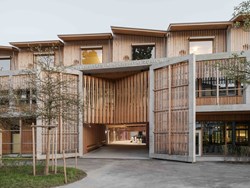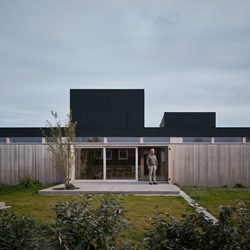

At first glance, the University Children's Hospital Zurich by Herzog & de Meuron gives no indication that it is a hospital.
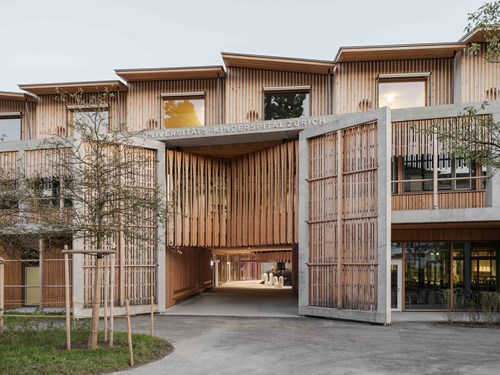
Photo credit: © Maris Mezulis
Great design requires not only knowledge and creativity, but also empathy and sensitivity. Basel-based practice Herzog & de Meuron have achieved this in a project that sets new standards in hospital construction, as the jury of the Iconic Award also believes.
At the foot of the Burghölzli hill, where orchards meet gently rising terrain and historic hospital buildings, Herzog & de Meuron's new University Children's Hospital Zurich feels like a natural part of the landscape. The project unfolds as two beautifully distinct buildings, each with its own character, yet part of a thoughtfully conceived whole. To the south, the acute care hospital stretches out as a graceful three-storey volume. Its gentle, sinuous lines seem to settle into the landscape, creating a sense of flow between inside and outside. To the north, the research and teaching building takes a completely different approach: a striking circular form in white that sits like a pavilion within a newly planted orchard. More than 250 new trees and carefully positioned boulders bring the two buildings together into a cohesive campus, where the landscape itself becomes your guide. The result is an environment where architecture and nature feel woven together, creating spaces that feel calm, clear and genuinely healing.
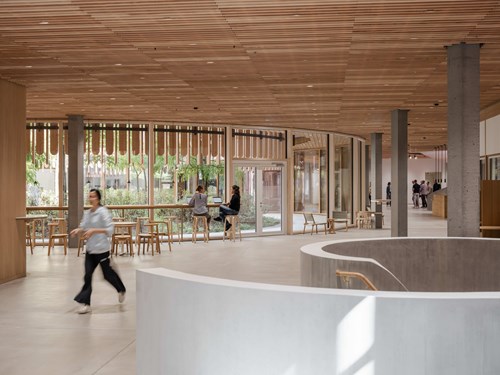
Photo credit: © Maris Mezulis
Herzog & de Meuron have reimagined what a healing environment can feel like, creating interiors that blend clinical precision with warm, tactile materials. The hospital is designed as a place where natural light, fresh air, greenery and art are integrated into every space you experience. Timber finishes, soft textile elements and natural surfaces bring warmth and texture to rooms that might otherwise feel purely functional. At the heart of the design is a clever 'double layer' concept: beneath the highly efficient medical setting lies a gentler, child-friendly space that feels clear, reassuring and emotionally comforting. Colour and texture are used thoughtfully and sparingly, creating a calm, familiar atmosphere rather than overwhelming young patients. Instead of the typical smooth, reflective clinical surfaces, the interiors encourage intuitive movement and invite touch. It's a space that feels attuned to the rhythms of daily hospital life while bringing in all the comforting qualities of home.
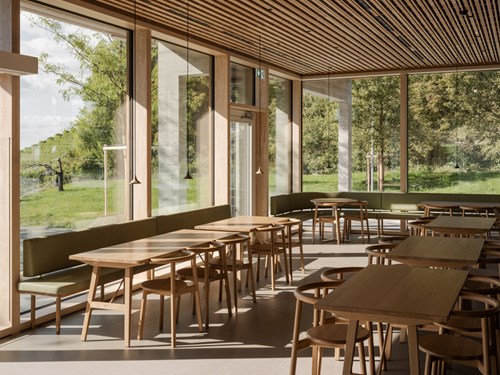
Photo credit: © Iwan Baan
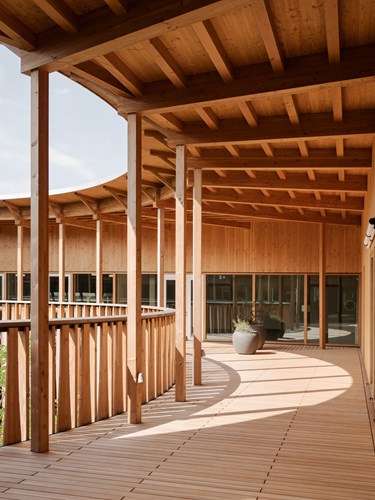
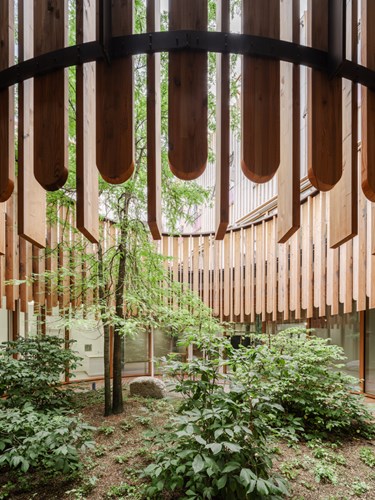
The children's hospital feels refreshingly human in scale, with familiar, welcoming forms rather than institutional features. Its low-rise profile, warm timber-slatted façade and clearly defined entrance create a look that's closer to a countryside retreat or holiday house than a medical facility. Inside, a series of green courtyards and clear sightlines connect the different areas, flooding the interiors with daylight and making it easy to find your way around. Treatment areas are arranged along an internal 'street', where their calm, transparent design creates a sense of openness that feels reassuring rather than clinical. Patient rooms are decorated in earthy, grounding tones and frame beautiful views into the courtyards, while all the technical equipment is tucked discreetly away. The communal spaces feel clear and easy to navigate without overwhelming the senses. Through thoughtful choices in materials, scale and layout, the interiors create an atmosphere of safety and familiarity - essential for young patients, and something that gently helps them engage with their treatment in a space that feels more like home.
Photos: © Iwan Baan
“A hospital is a place people encounter at moments of profound vulnerability, yet it's all too often one of the least thoughtfully designed spaces we experience. We believe that interiors can make a real, tangible difference. At the new 'Kispi', the Children's Hospital, this belief comes to life: in the way changing proportions and carefully considered light bring spaces alive, and in how materials are chosen not just for how they look but for how they feel to the touch. The interiors here aren't simply a backdrop to care; they become an active part of the healing process.” — Jacques Herzog
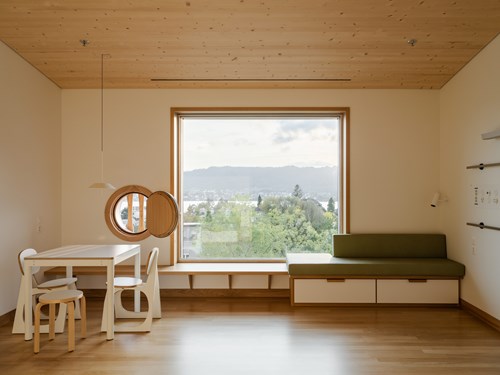
Photo credit: © Maris Mezulis
In the patient rooms, architecture and interior design come together beautifully. Each of the 114 rooms feels like a small timber house of its own, complete with a private bathroom and a pull-out bed for parents. Sloping wooden ceilings create a sense of warmth and shelter that's especially comforting from the patient's bed. Generous windows frame views towards both the city and surrounding landscape, while circular portholes positioned at children's eye level add delightful, playful moments throughout the space. The furniture and surfaces feel genuinely homely: deep window sills work as cosy seating spots and play platforms, while a carefully chosen palette of colours gives the rooms structure without feeling overwhelming. Materials have been selected not just for their durability and practicality, but for how lovely they feel to touch. The deliberately intimate scale of each room means different age groups can have their own space while still feeling cared for individually—creating the kind of privacy that's often hard to find in a hospital setting.
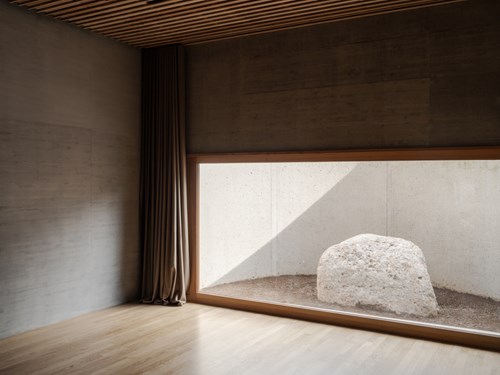
Photo credit: © Iwan Baan
The flooring, inspired by sisal mats with their soft yet textured surface, creates a calm, grounded atmosphere that feels refreshingly different from the smooth, sterile floors you'd expect in a hospital. The natural tones sit beautifully alongside timber details, greenery and light wall surfaces. Both acoustically and visually, these materials help create a relaxed environment for everyone. The furniture choices follow the same thoughtful approach: robust yet understated, in warm yellows, greens and browns that echo the courtyards outside. Touches of pink glass add gentle accents here and there, bringing a subtle sense of playfulness to the spaces. The result is a beautifully cohesive interior where materials, colours and furnishings work together to create an inviting, healing environment, one that supports the hospital's practical needs without ever feeling clinical or cold.
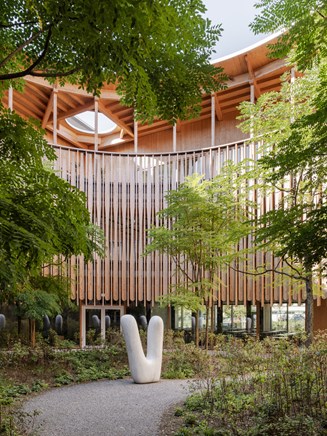
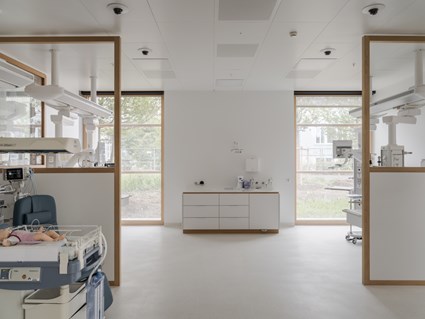
Photo credit: © Iwan Baan
Originally written by Barbara Jahn, translated and slightly adapted by Helen Parton